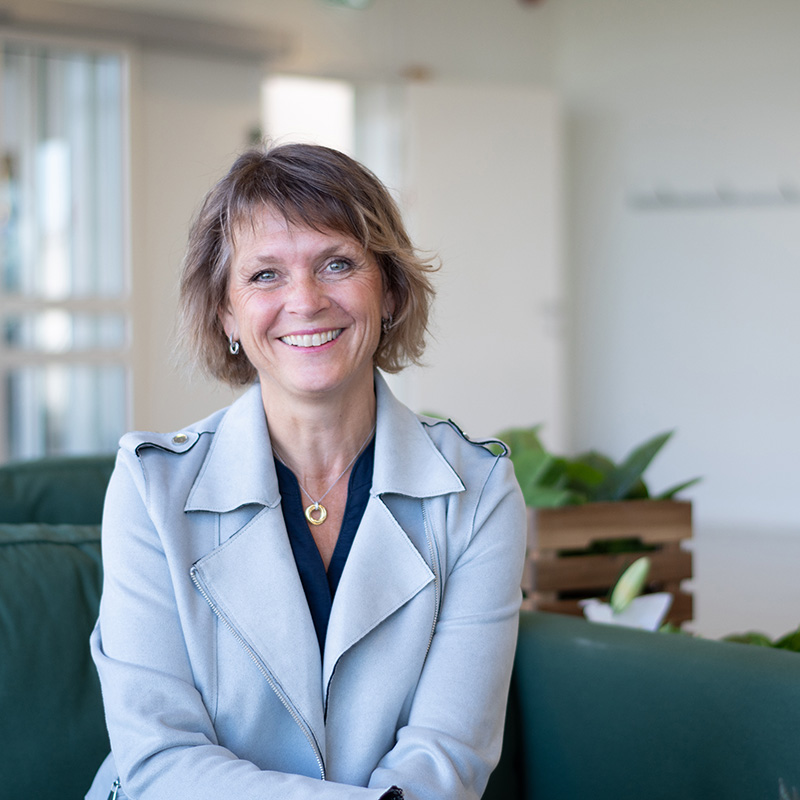
Oslo, 6 March 2026: Today, Abelia and the ODA Network launched the list of Norway’s 50 leading tech women, which includes Senior Scientist and Head of Section Cathrine Lund Myhre at NILU.
The purpose of the award is to highlight role models to inspire more people to choose technology and science education. The jury has emphasized technological expertise, concrete contributions and achievements, and motivation and efforts to promote diversity and inclusion in technology.
Dr. Cathrine Lund Myhre is a leading expert in measuring and understanding changes in atmospheric composition. With more than 30 years of experience, she has developed deep insight into observations, causal relationships, and the effects of atmospheric changes, as well as requirements for data quality, databases, data access, and data management. She has contributed to a wide range of EU projects and has led major e-infrastructure projects and research projects funded by the Research Council of Norway.
“It is a great honour, a surprise, and a joy to be included on the list of Norway’s 50 leading tech women in 2026. For me, it is also significant recognition of our field and of how we work with data management and data use here at NILU,” says Cathrine.
Traceable Research and FAIR Data
Over the past 10–15 years, Cathrine has primarily worked with atmospheric observation networks and the implementation of systems that provide access to observational data. She has played a key role in securing open access to data through the adaptation and development of databases and infrastructures.
Climate and atmospheric research depend on well-documented and traceable data to ensure reliable knowledge and the correct use of data. Cathrine has been central to the implementation of FAIR data and the FAIR principles (see info box below) in key European and international databases across the atmospheric sciences more broadly.
Cathrine leads NILU’s Centre for Atmospheric Data, which was established in January 2025. The centre currently consists of a highly skilled interdisciplinary team of 12 people. They process, quality-control, analyse, interpret, and ensure access to observational data from national and international research infrastructures, research projects, field campaigns, and long-term monitoring programmes.
Large, Open Databases
Through NILU’s databases, all types of users are offered free and open access to atmospheric data. Each year, many thousands of users from around the world make use of these data, and the systems are under continuous development.
As part of this work, Cathrine also leads the ACTRIS Data Centre within ACTRIS ERIC. ACTRIS stands for Aerosol, Cloud and Trace Gas Research Infrastructure and is a major European research infrastructure with 17 member countries.
As of March 2026, more than 150 variables describing atmospheric composition and around 400,000 atmospheric datasets from nearly 800 measurement stations are available in the ACTRIS Data Portal.
Reliable Data Are Crucial in Our Time
Cathrine is passionate about “good data.” In today’s society and political landscape, access to accurately described and reliable atmospheric and climate data is more critical than ever, she believes.
“Climate change is increasingly being questioned, and robust, well-documented data form the very foundation for political decision-making, the assessment of measures, and research aimed at improving our understanding of what is happening around us,” she says.
Environmental and climate change unfortunately do not come to a halt, even in times of political unrest elsewhere in the world. To understand the links between climate, the atmosphere, the oceans, biodiversity, and health, researchers must harness the power of artificial intelligence (AI).
“But AI-based results are never better than the information it has access to. Our most important task in the coming years is to ensure that the most reliable, comprehensive, and highest-quality datasets become ‘AI-ready’. That is not the case today. If AI is fed poor-quality or fabricated data, the answers will be wrong. We must ensure that our understanding and decisions are based on the best data available,” Cathrine emphasizes.
“That is why this recognition is especially motivating this year, as we are working somewhat against the tide.”
About the reward
Abelia, the NHO association for knowledge and technology companies, and ODA-Network, the Nordic region’s leading network for diversity in tech, are behind the award. The purpose is to increase the proportion of women who are passionate about and work with technology.
– At ODA-Network, we are committed to building technology competence and getting more women to choose technology as a field of study and in the workplace. That’s why role models are important. If Norway is to succeed, it must go faster, and with more perspectives – both in the coding club and the boardroom, says Kine Dahl, CEO of ODA-Network.
NILU’s CEO Tomas Nordlander agrees.
–We are incredibly proud that Cathrine Lund Myhre has been named one of Norway’s 50 best technology women in 2026. This is an award she truly deserves – not only for her substantial scientific standing, but because she has spent many years building the data expertise and infrastructure that modern atmospheric and climate research depends on. What Cathrine does is at the core of NILU’s mission: to deliver knowledge that society can trust.