Every week, Siri Leifsen sends water samples to NILU for analysis of various substances in precipitation. She does an important job for Norway’s environmental monitoring.
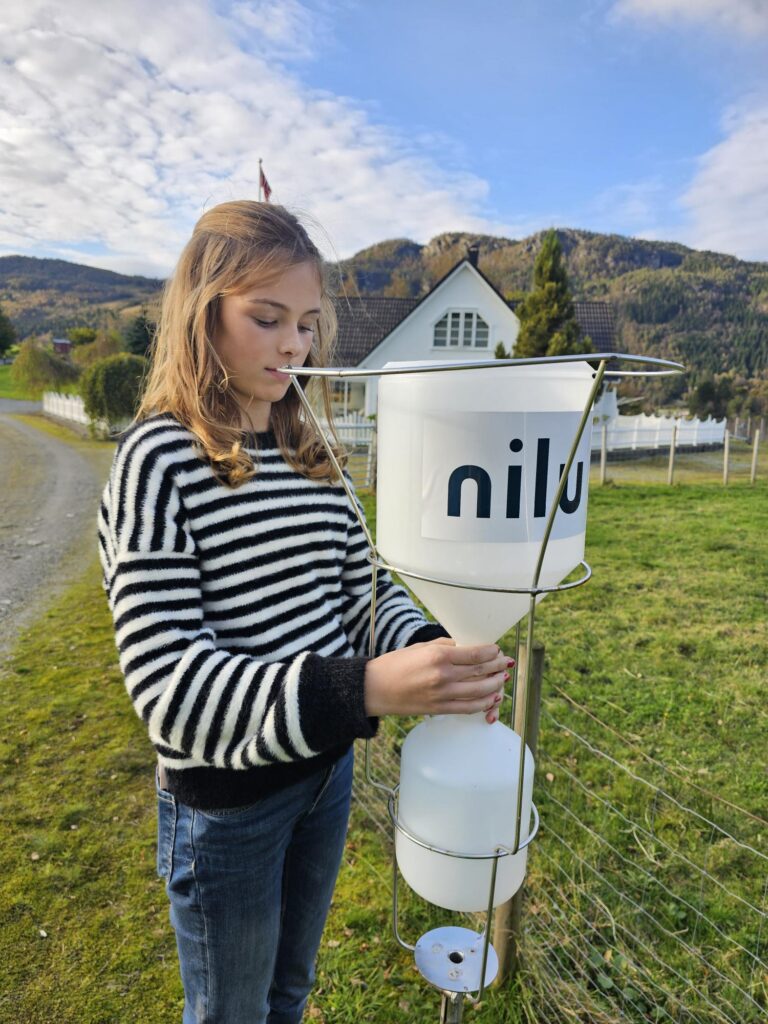
Every Monday, 14-year-old Siri Leifsen walks from the family farm in Vikedal to where the precipitation container from NILU is located. She has to do this between 7 and 9 in the morning. She takes the container home with her, and measures how much water has come into the container in the past week.
“Then I fill out a form with the station code, date and how much water there was in the container,” she says.
She doesn’t get all bank holidays off
Siri also takes a water sample from the container into a 100ml bottle. She marks it with the date and the total amount of water. She must immediately send this together with the form in the mail to NILU’s laboratory for analysis. She also needs to clean the container with distilled water and put it back in place.
“I also do this on the first day of every month,” says the 14-year-old.
This means that Siri will not be able to take time off work on Easter Monday, May Day, Pentecost Monday or New Year’s Day. If she goes on vacation, she must make sure that some neighbours do the work for her.
When the program started acid rain was the big issue
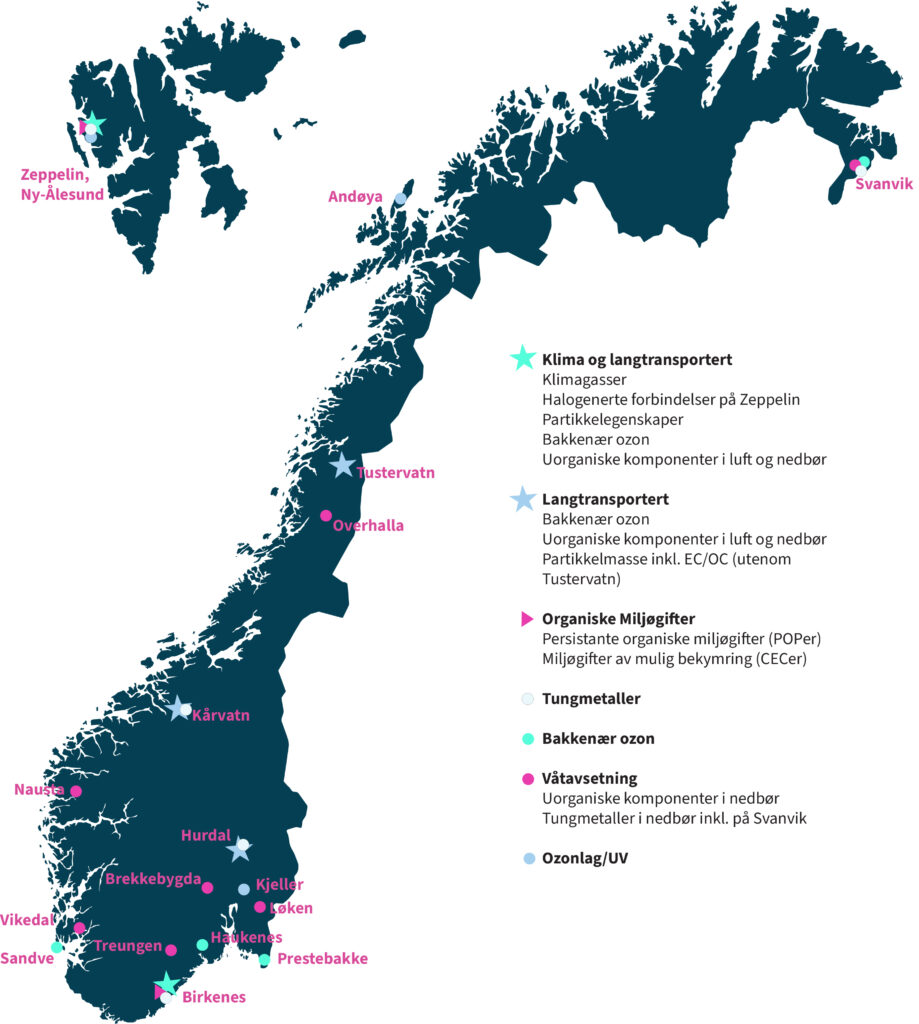
The container in Vikedal is part of NILU’s environmental monitoring programme and is a so-called background station. NILU has a total of 17 different stations throughout the country, including in Svalbard.
Environmental monitoring has been going on since the 70’s and is part of the Norwegian Environment Agency’s national monitoring programs. Some time series are also funded by the Ministry of Climate and Environment.
Senior Researcher Wenche Aas is responsible for the environmental monitoring programme at NILU. She says that it was primarily acid rain that the authorities were concerned with when the programme started. This was due to massive fish deaths in Norwegian freshwaters.
“In addition, the nitrogen can lead to eutrophication, both on land and in water. The pollution of sulphur and nitrogen has become much less since that time. The fish are back in the waters, but there are still sensitive areas that receive too much,” says Wenche.
The job is a family tradition
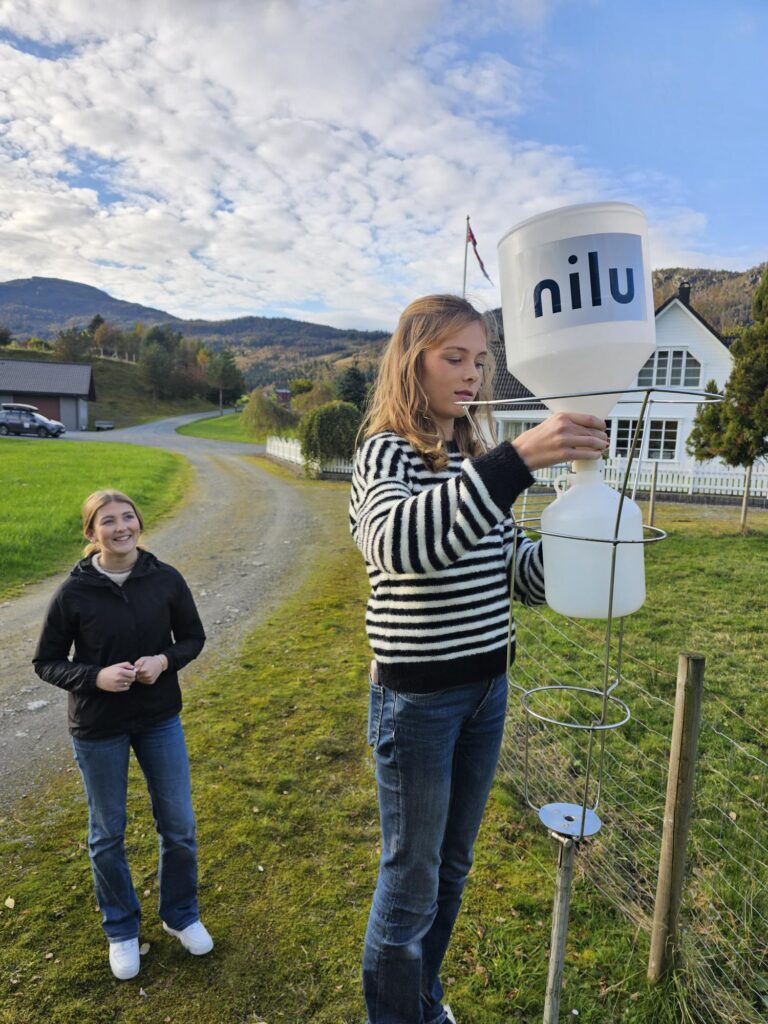
NILU’s 10 background stations are often located near farms. It is usually the people who live there who carry out the weekly and monthly measurements. They are called station keepers and receive a fee as a salary for their work.
Station keeper is a job that is often passed down from generation to generation. It has also done so in Siri’s family.
“Grandpa had the job from long before I was born. Later, my older brother took over. When he moved, the job passed to my older sister. When she started high school, I got the job,” says Siri.
Station keepers are the first link
The station in Vikedal has been involved since 1984. Siri thinks it is a nice family tradition to have a part-time job that contributes to NILU’s environmental monitoring.
Wenche, who works in NILU’s Department of Atmosphere and Climate, says that the station network is essential for NILU’s research.
“The station keepers are the first link. If they don’t do a good job, everything falls apart,” she says.
“An important commitment”
Senior engineer Sébastien Oftedal Barrault, in NILU’s Department of Measurement and Instrument Technology, is Siri’s contact person at NILU. He praises the efforts made by the station keepers.
“They are very important to our work. Thanks to them, we can point to long time series with measurements over several decades,” says Sébastien.
He thinks it’s extra fun that young people like Siri and her siblings take on this responsibility.
“It’s a big and important commitment. The station keepers must be very careful about how they collect and document the samples.”
What happens to the samples Siri sends to NILU?
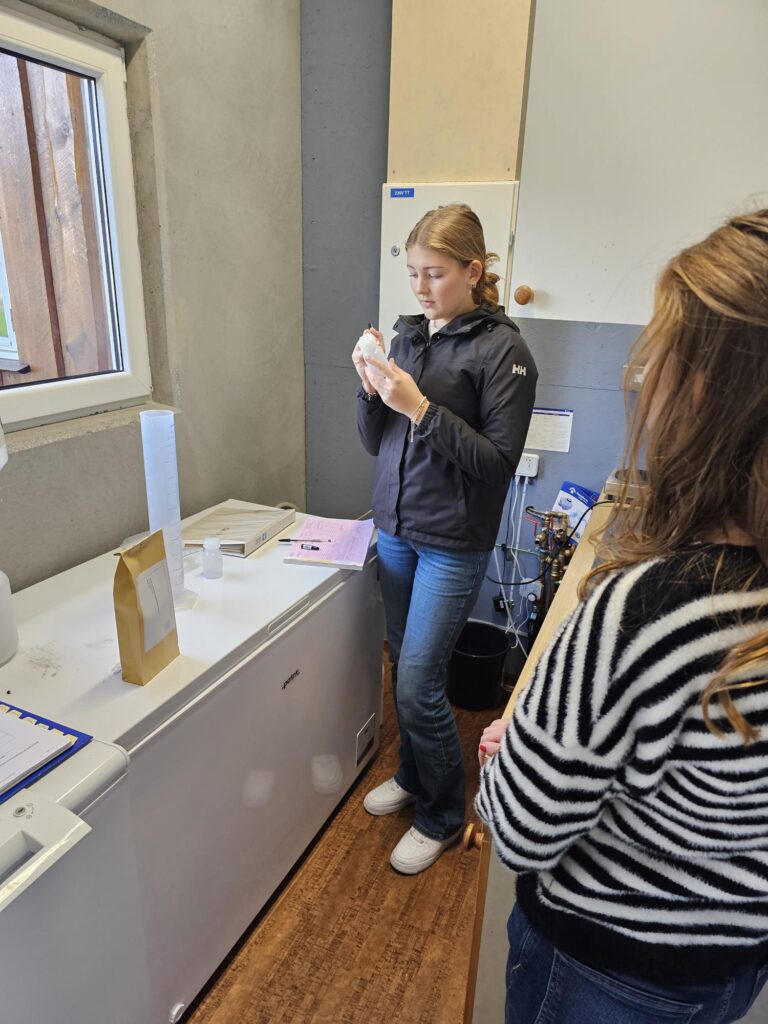
When the water samples Siri has taken arrive at NILU, it is the Department of Environmental Chemistry and Health that takes care of the analyses.
At the laboratory, the noted date and amount of precipitation are registered in NILU’s system. Precipitation samples can be analysed directly, and NILU therefore does not need to do anything with the samples before the analysis.
The water in the bottle from Siri is poured into smaller test tubes that are placed on an advanced instrument. The sample is analysed for anions (chloride, nitrate and sulphate) and cations (sodium, ammonium, potassium, magnesium and calcium). NILU also analyses the water’s pH and conductivity. (See info box below).
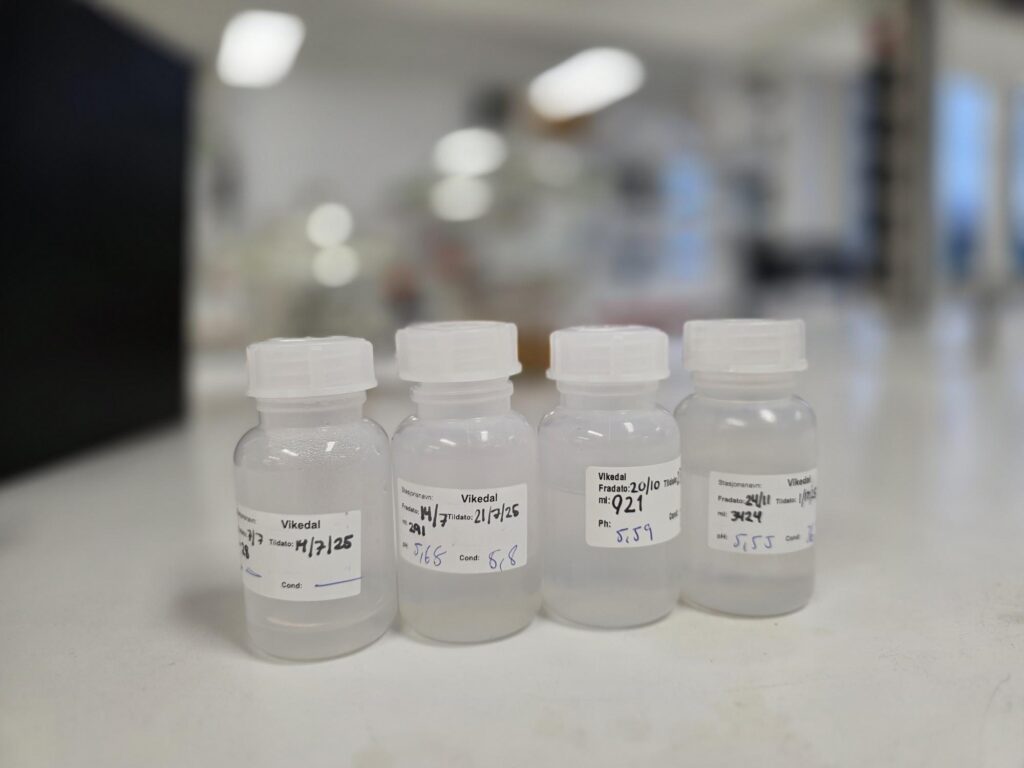
The scientist are following to see if the tolerance limits have been exceeded
All these results are reported to senior researcher Wenche Aas. Together with other NILU researchers, she prepares a report for the Norwegian Environment Agency every year. The data is also used by other researchers, both at NILU and other institutions. Among other things, they are used to develop models that can say something about what we can expect in the future.
Every five years, a report is also produced in collaboration with the Norwegian Institute for Water Research (NIVA). Here they can see if the tolerance limits have been exceeded and if acidification or eutrophication has occurred. Eutrophication is an increase in nutrients (phosphorus and nitrogen) in water, which leads to algal blooms, among other things.
These Norwegian time series are particularly valuable
One goal of the background stations is to find out what types of pollutants are in the air over Norway. Particularly important is the measurement of the pollution that is brought here by weather and wind – so-called long-distance transport. Therefore, the stations are also located so that they are affected as little as possible by local emissions.
All things that may affect the water samples must be carefully documented. If someone paints a nearby house and barn, or the fields are fertilized, the station keepers must make sure that it is reported.
Employees at NILU go out for inspections to the station keepers once a year. This ensures that they are up to date on any new routines and that they have the equipment they need.
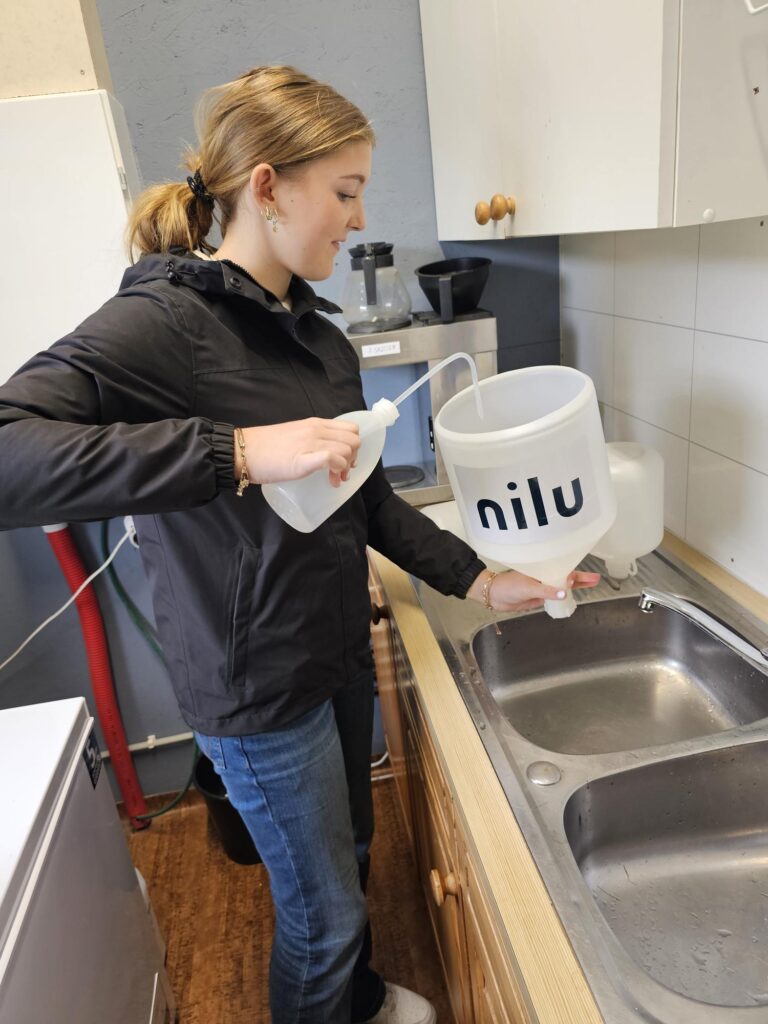
Since the measurements are so-called accredited measurements, NILU and the station keepers are also inspected by Norwegian Accreditation at regular intervals. Accreditation is the official approval that services are performed in accordance with an international standard.
Several of the long time series NILU has measured have been going on uninterrupted for over 40 years. Internationally, there are few time series that extend over such a long period of time. This makes these Norwegian time series particularly valuable in international research as well.