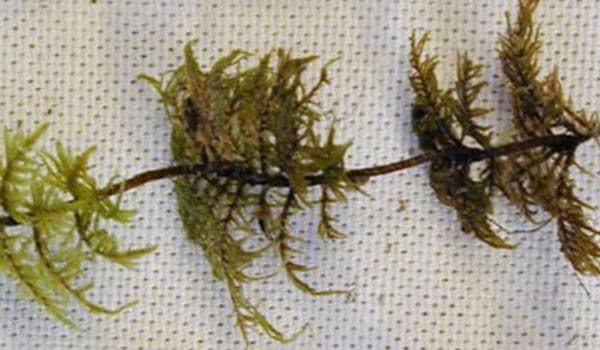
Small cubes of moss will find out how much microplastics there are in the air in Europe’s pedestrian streets.
This summer, three small cages with moss have been hanging in Oslo’s pedestrian areas. They have measured microplastics in the air. But what does moss have to do with microplastics?
“Moss is well suited for capturing environmental toxins, especially heavy metals, but it is also used for other substances. The process is very simple: environmental toxins are deposited on the moss; researchers collect it and then we can analyse it. By analysing moss from many different places, we get a good geographical distribution of environmental toxins,” says senior researcher at NILU, Tore Flatlandsmo Berglen.
NILU is involved in a joint European moss project called MADAME3. The project name stands for Microplastic Atmospheric Deposition Assessment using Moss in Europe.
Measures the air in pedestrian streets in 34 cities
The project uses specially made moss cubes to measure the amount of microplastics as a so-called ubiquitous atmospheric contaminant in 34 European cities. The measurements will take place in urban areas with many pedestrians.
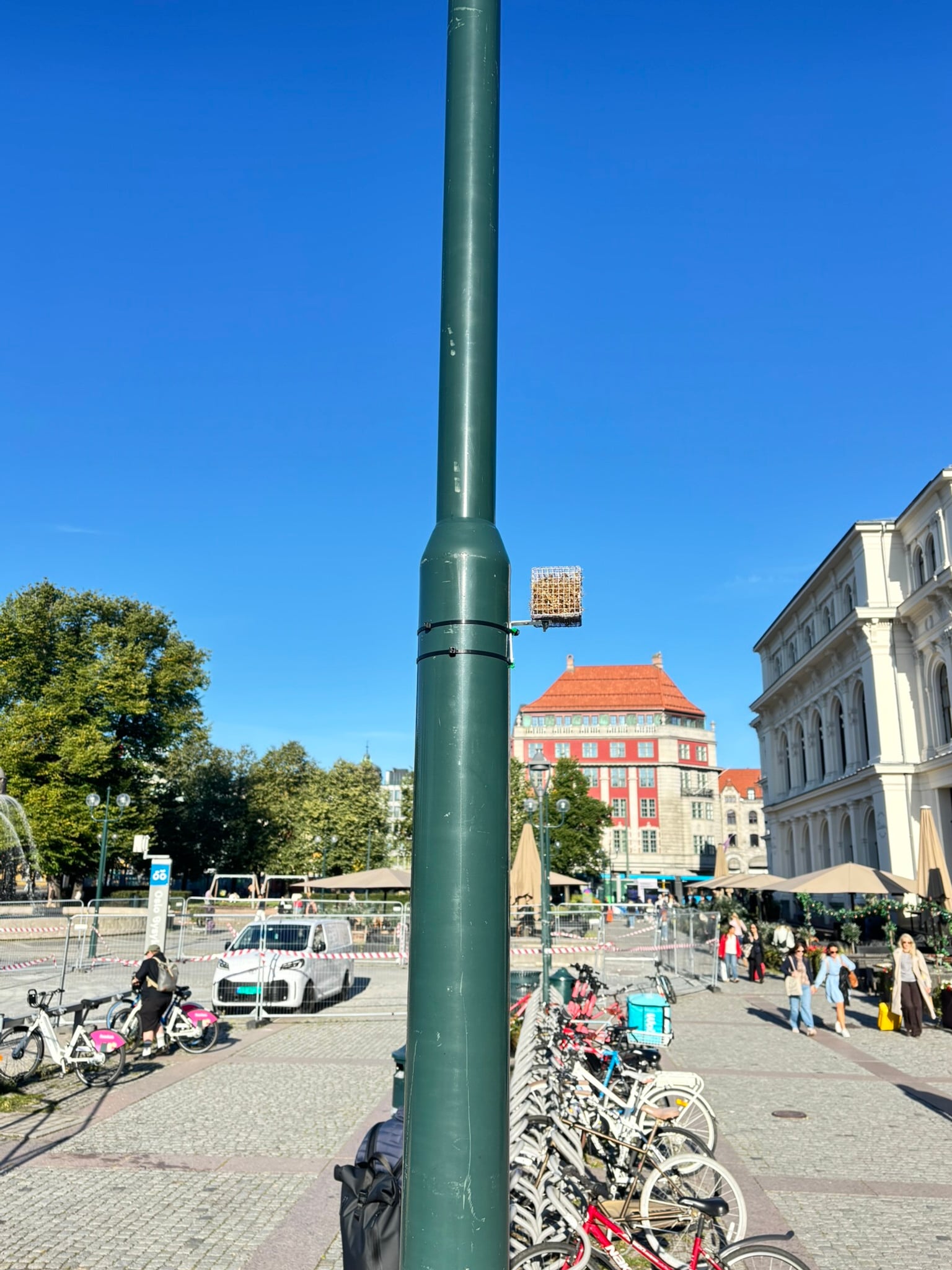
The moss cubes are 6x6x6 cm in size, surrounded by a mesh cage of galvanised zinc, with a mesh width of 6 mm. Each moss cube contains 2.5 g of the moss type Pleurozium schreberi.
Moss is a proven measurement method for environmental toxins
This is not the first time NILU has measured pollutants and particles in the air using moss.
“The method was developed in Scandinavia in the 1960s and NILU has extensive experience with the use of moss as an indicator of pollution. Among other things, we were central to the nationwide moss program between 1985 and 2015. Moss is also ideal for measuring pollution around industrial sites, such as in the border areas with Russia,” says Flatlandsmo Berglen.
The unique thing about this project is that the moss has been taken out of its natural habitat to measure pollution elsewhere. After all, there is little moss growing in cities. To use the method in urban areas, the researchers therefore had to collect moss from rural areas and then make samplers.
The moss cubes have been developed by researchers Mehriban Jafarova and Julian Aherne at the School of Environment, Trent University in Canada. They are leading the MADAME3 project together with researchers from the University of Siena, the University of Belgrade and the UK Centre for Ecology & Hydrology.
In their scientific publication in Science Direct on the development of the moss cube, they write, among other things, that such 3-D samplers with a large mesh width and high moss mass are optimal for measuring microplastics.
“There is growing interest in the use of moss transplant samplers to assess atmospheric microplastics,” the researchers write.
Few pedestrian streets without close traffic in Oslo
All 34 cities in Europe that are part of the MADAME3 project have had their cubes hanging up for about the same period from 21 July to 25 August this year.
There were strict requirements for how the cubes were treated and where they should be hung. Only researchers and engineers with experience in environmental sampling were allowed to take care of the installation of the cubes.
All the cubes had to be placed openly on a vertical structure such as a lamppost. They were not to be under roofs or balconies. The three cubes in each city were to be placed at a distance of 250-500 meters and at least 50 meters from busy roads.
“This was a challenge in Oslo as we don’t have that many pedestrian streets, and the ones we do have are often crossed by busy roads,” says Senior Engineer at NILU, Samuel Celentano.
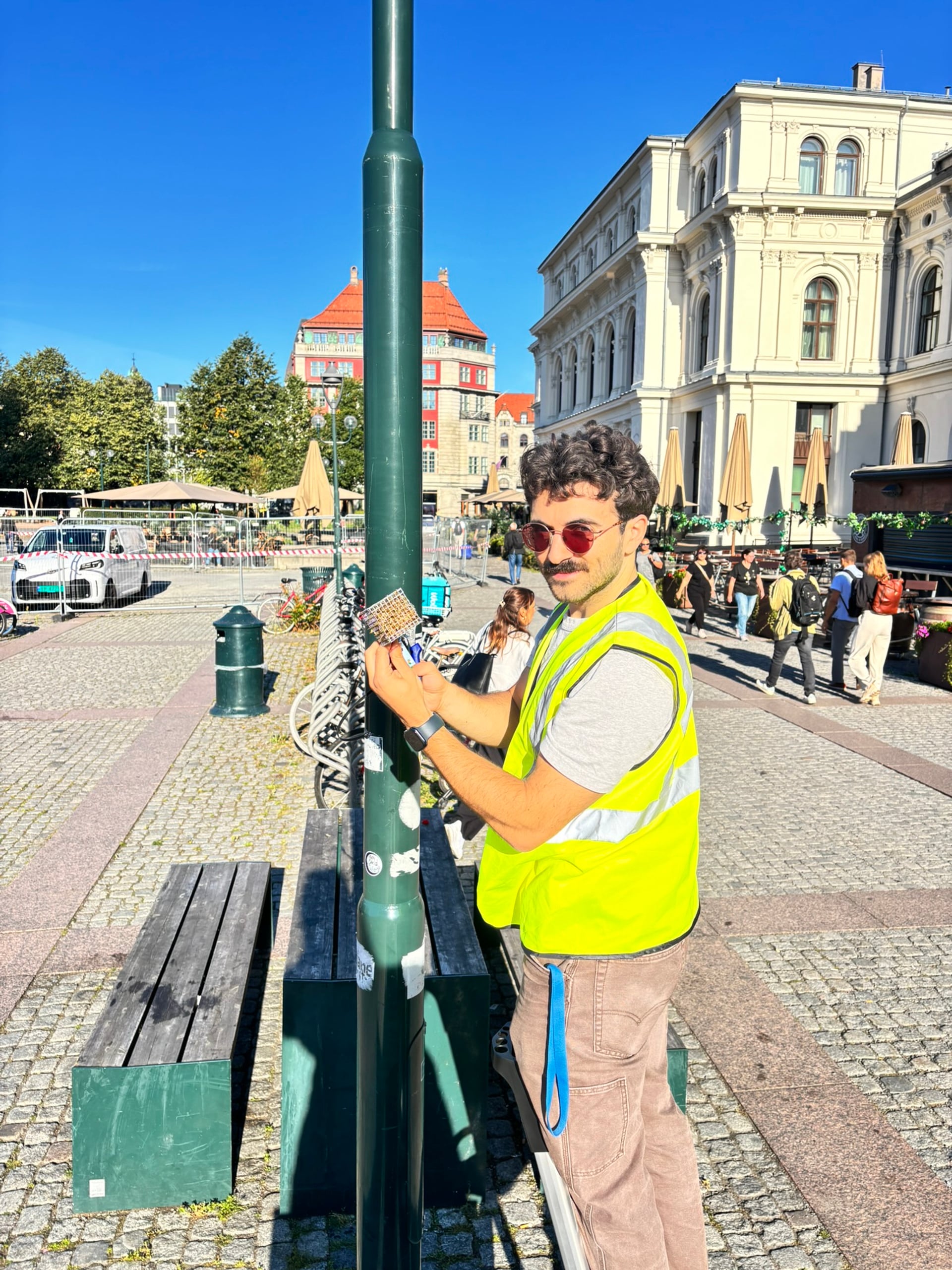
He was responsible for the placement of the cubes in Oslo. Celentano eventually found three places that met the requirements: One at Aker Brygge, one at Karl Johans gate and one at Østbanehallen at Jernbanetorget.
Trying to reduce other influences
Anything that may affect the samples must be reported. On the lamppost at Aker Brygge, for example, there were banners that were replaced during the measurement period.
“The researchers who will analyse the samples need to know about such conditions, in case the banners, which are probably made of polyester, have released extra microplastics that affect the amount in the moss,” says Celentano.
All the cubes are packed in boxes both before and after deployment to reduce contamination of the moss during transport.
After the moss cubes have hung outside for 35 days, they are sent to the UK Centre for Ecology and Hydrology in the UK where the moss will be analysed.