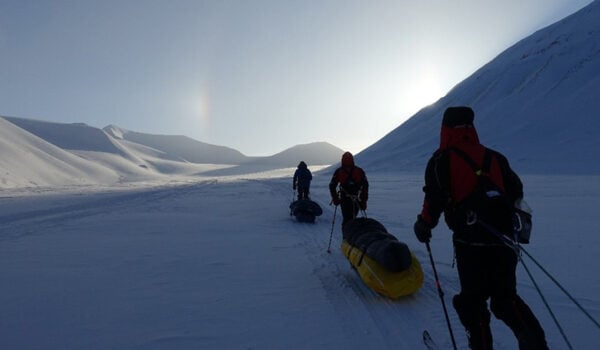
When car tire particles and other microplastics are absorbed into the air, it can travel hundreds of miles in a few days. Norway is the only country in the world that has permanent monitoring of microplastics in the air.
In air everywhere, there are microplastics. It spreads far and fast. A new research article from NILU, Airborne microplastics on the move: Urban Europe as a source to remote regions, refers to measurements of microplastics in air over almost five years.
“There has been little knowledge about microplastics in the air. More attention has been paid to plastic particles in water and sediment,” says senior researcher at NILU, Dorte Herzke.
The measurements started as a pilot project in 2021 with six measurements over three months in Svalbard and Birkenes in Agder. The surveys were then a small part of the Norwegian Environment Agency’s first Micronor project which is led by NIVA (Norwegian Institute for Water Research).
Since then, NILU has expanded to more measurements and more places, including Oslo and Trondheim. Now it is measured 12 months a year. In addition to funding from the Norwegian Environment Agency, NILU has financed some of the measurements by itself. The researchers have also received some funding from NAMC (North Atlantic Microplastic Centre).
“Through our investigations and analyses, we can follow the situation around microplastics in the air more broadly. It’s good to be able to measure continuously over a long period of time and at different times of the year,” says Herzke.
Car tires dominate
Almost all the air samples NILU analyses through Mikronor contain microplastics.
In urban areas, the air is dominated by local emissions from human activity. Over 80% of the total plastic mass in the air in cities consists of car tire particles. The researchers also see a clear increase during the transition to winter tires.
The findings at the more remote monitoring stations confirm that microplastics are transported over long distances through the atmosphere. The study concludes that atmospheric transport is a major way to spread environmental toxins to areas in nature.
“Everything that is transported by air is very fast. It moves much faster than particles in the ocean, for example. We are sometimes only talking about days before the particles have been transported many hundreds of miles,” says Herzke.
“The air knows no borders,” she adds.
At the Zeppelin Observatory in Svalbard, analyses of air masses have shown that high concentrations of microplastics originate from urban areas in Europe. This is confirmed by advanced dispersion models that show that Central and Southern Europe are the main sources of microplastics in the Arctic.
Monitored only in Norway
“Norway is the only country in the world that has permanent monitoring of microplastics in the air,” says Senior Scientist Natascha Schmidt. She is the project manager at NILU for the fourth Micronor project.
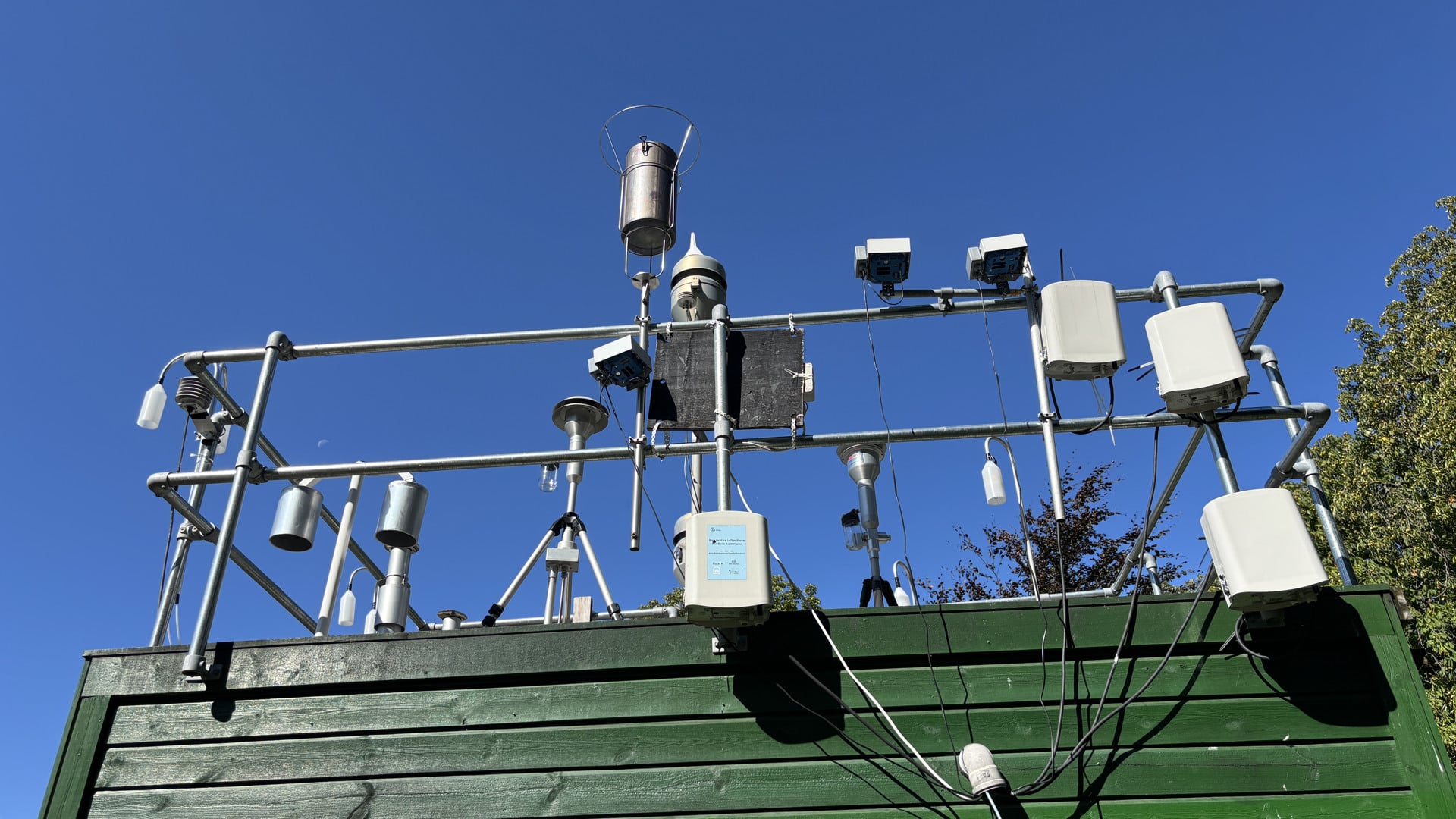
NILU uses two different methods to measure microplastic particles in the air:
- Active air collectors suck air through a filter and measure microplastics floating in the air (suspended).
- Passive collectors measure how much falls to the ground, including in precipitation (deposition).
You can read more about the samplers and methods in this article from 2023.
This dual dataset has allowed for a robust cross-validation of atmospheric load estimates.
“There was no such data from Scandinavia before. There are only a few places in the world where such double studies have been done,” says Herzke.
Expanding existing models
Researchers at NILU have long been experts in modelling particle transport in air. For microplastics, both the equipment and the models must be developed and adapted. This is an ongoing work.
“All of the measuring equipment was made of plastic. We had to copy all the measuring equipment in materials that do not themselves emit microplastics to the air samples, such as steel and aluminium,” the researchers say.
It was important to make the new measuring equipment as similar as possible. Then the measurements of microplastics can be compared with other measurements NILU makes of pollution in air.
“Then this data can also be collected in the databases NILU has for air pollution,” Herzke explains.