Can a combination of machine learning, explainable KI (X-AI) and logical maps help people exercise better? NILU researcher has developed a new way to recommend exercise.
When summer is over and the pouring rain and wind of autumn take over, it can be difficult to follow a training program that suggests a run outside. Unsuitable weather such as rain, snow and cold can take away anyone’s motivation and lead to a more sedentary lifestyle indoors.
What if a fitness app could suggest workouts that take into account both the user’s physique and preferences, as well as environmental obstacles?
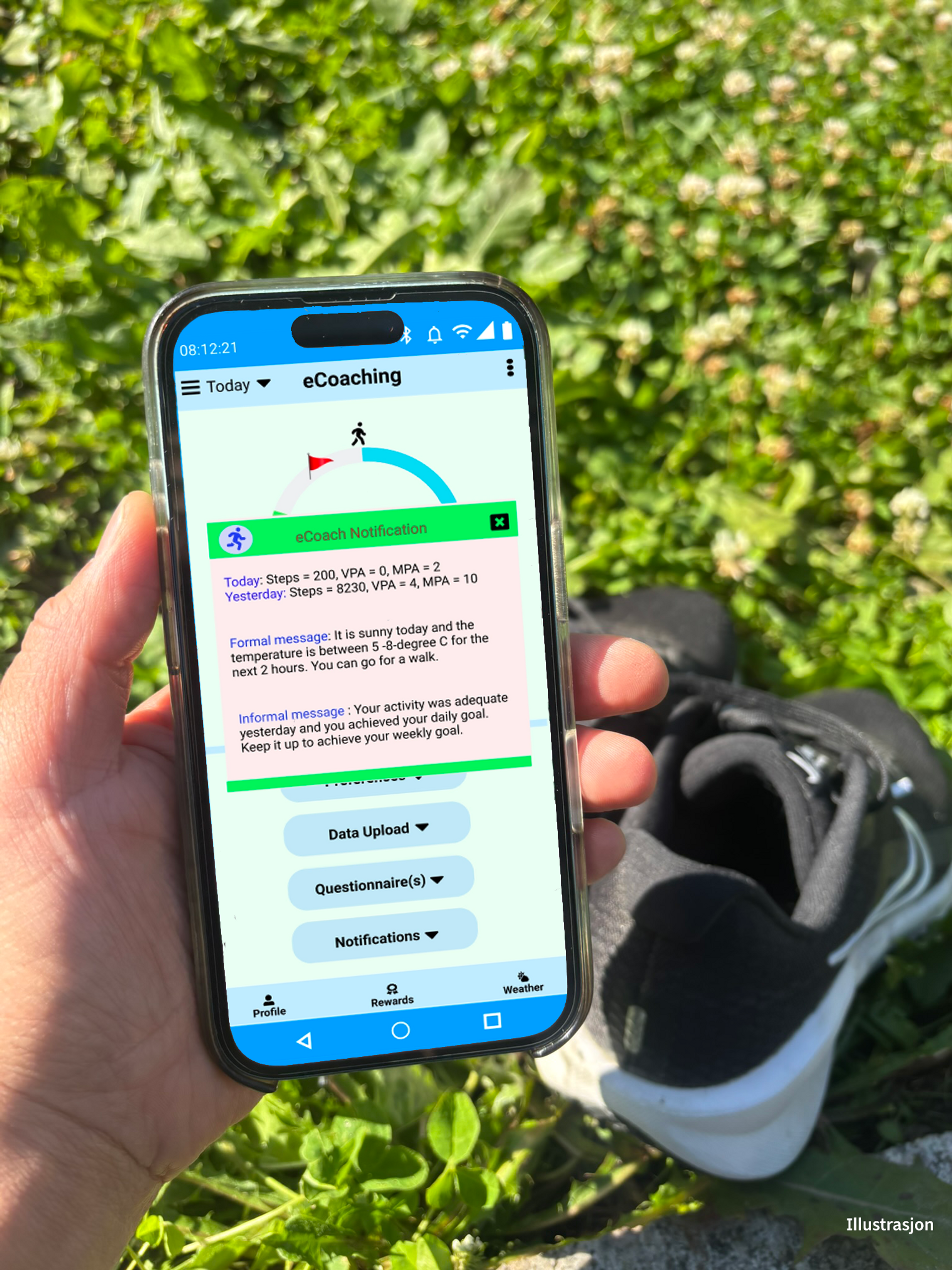
Imagine a digital training and self-motivating system (eCoach) that takes the weather into account. And what if it also explains to you why it recommends a given routine when it gives you its customized training advice?
A smart digital trainer
Researcher at NILU’s Department of Digital Technologies, Ayan Chatterjee, has recently published a study in Frontiers in Digital Health. The study is published in collaboration with Associate Professor Nurilla Avazov at the University of Inland, Norway.
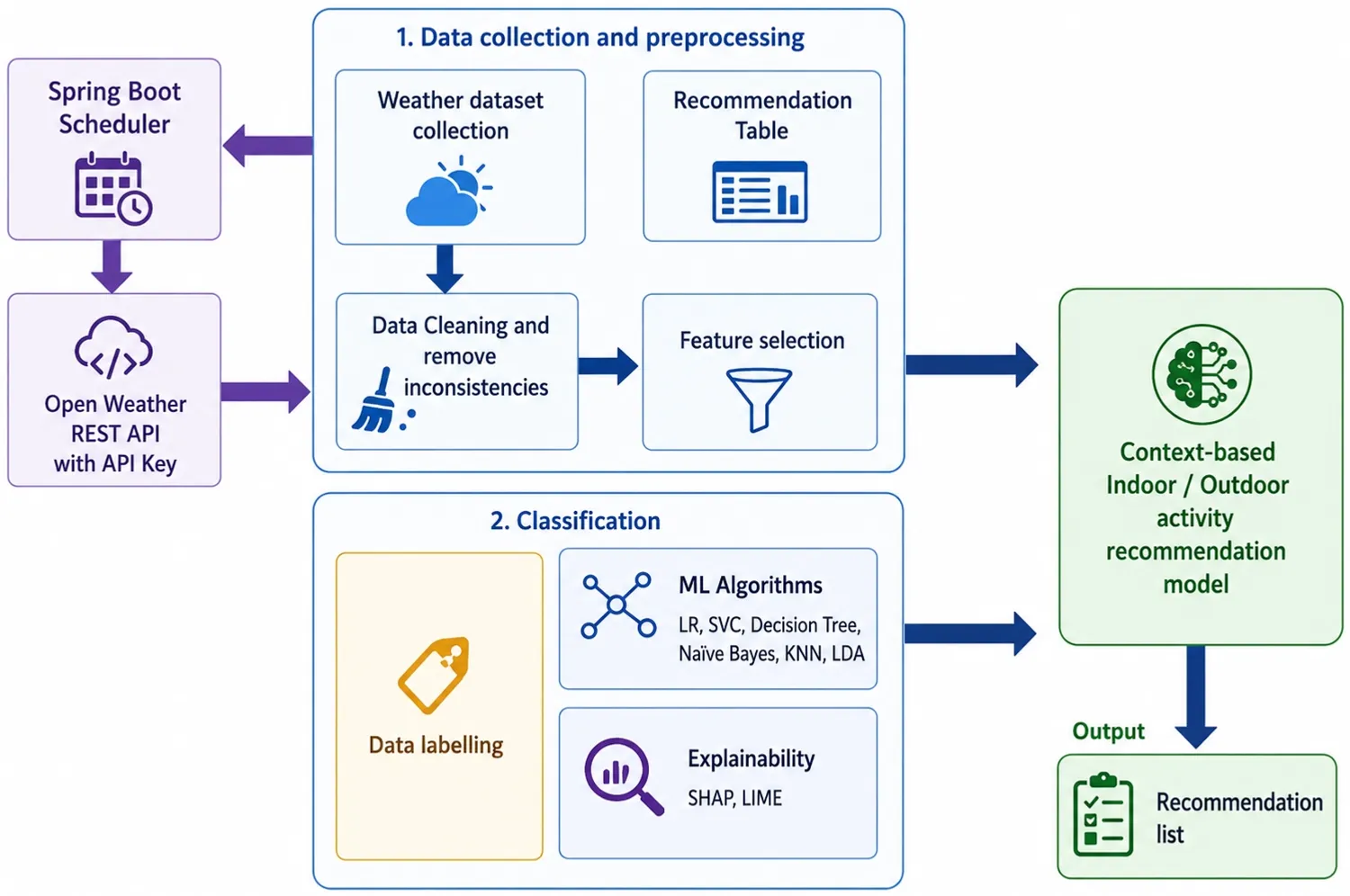
In the study, the researchers have developed a smart digital trainer that uses artificial intelligence (AI). It can give you tailored training advice based on the weather here and now.
“Many eCoaching systems are designed to help people reduce sedentary behaviour by tracking their activity and motivating them to become more physically active. However, most provide only general advice, and rely mainly on a person’s activity history, with little consideration of contextual factors such as weather or environmental conditions”, says Chatterjee.
Research has shown that weather conditions can have a big impact on how physically active people choose to be, he explains.
“While many studies have explored the relationship between weather and physical activity, few translate real-world weather conditions into personalized exercise recommendations. That is the gap we wanted to address”.
Logical explanation increases trust
What makes the technology in this study special is that it is not only accurate, but also transparent. By using so-called “explainable AI” (X-AI), the system can explain why it gives a particular advice. Thus, you can check the logic behind the recommendation.
“Many existing systems use artificial intelligence to recommend physical activities, but they rarely explain why a particular activity is suggested”, says Chatterjee.
“By making the reasoning visible, we can help users better understand and trust the recommendations”.
In the study, all the knowledge in the system is organized in a logical map, a so-called semantic ontology. This allows the digital trainer to “think” and give sensible advice that is coherent.
“We wanted to develop a system that not only makes recommendations but can also explain the reasoning behind them”, says Chatterjee.
“Machine learning helps the system understand weather conditions, while the knowledge model enables it to explain why a particular activity is recommended for that specific situation”.
Encouraging activity
The goal of the digital trainer is to remove environmental obstacles. This way we can stay active all year round and avoid illness.
“Our solution combines weather data with personal preferences and information about how physically active the user is. In this way, the advice can be adapted to both the surroundings and the individual”, says the NILU researcher.
Extensive tests carried out under changing Norwegian weather conditions confirm that the system is very reliable. The AI model hits the right spot on the type of activity in over 99% of cases.
“What does the system do if the weather forecast predicts torrential rain and it sees that the user has been inactive for the past week? It suggests an easy indoor workout. If, on the other hand, the weather is nice and the user has been still a lot, the recommendation may be to go for a walk or cycle”.
In other words, with this technology onboard, there is no excuse to stay on the sofa, regardless of the weather conditions.
“By combining artificial intelligence with a semantic knowledge model, we get an automated system that can reason more systematically. It makes the recommendations more personal, more reliable and easier to understand. This is important if artificial intelligence is to be used in decisions related to health”, Chatterjee believes.
It is not currently possible for the general public to test out the training and self-motivation system the NILU researcher has developed, but Chatterjee hopes to publish a prototype soon.
Publication: Contextual recommendation modeling in eCoaching with machine learning, X-AI, and semantic ontology