10 August 2026: According to the 36th annual State of the Climate report, greenhouse gas concentrations, temperatures and European wildfire emissions all reached record highs in 2025.
The international annual review of the world’s climate, published by the American Meteorological Society (AMS), is based on contributions from 625 scientists in 60 countries – among them Norway.
It provides the most comprehensive update on Earth’s climate indicators, notable weather events, and other data collected by environmental monitoring stations and instruments located on land, water, and ice, as well as in space. The report is published as a supplement to the Bulletin of the American Meteorological Society (BAMS).
Notable findings from the international report include:
Record-high greenhouse gas concentrations
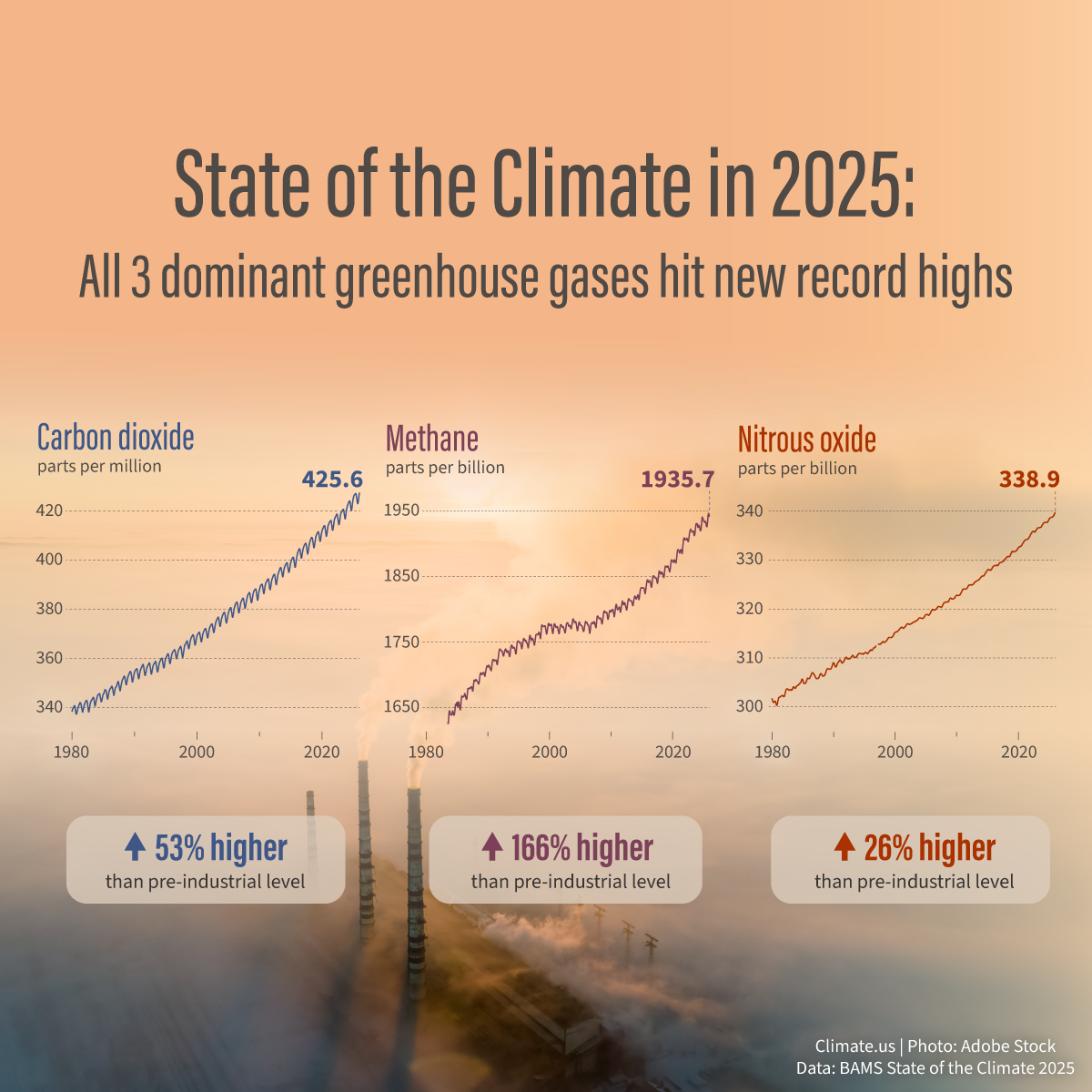
Carbon dioxide (CO2), methane, and nitrous oxide — Earth’s major atmospheric greenhouse gases — once again reached record-high concentrations in 2025.
The globally averaged CO2 level reached 425.6±0.1 parts per million, a 53% increase from the preindustrial level of ~278 ppm.
Fossil fuel emissions in 2025 were also a record high in 2025, estimated to be 10.3±0.5 petagrams of carbon per year, more than three times the 3.0±0.2 petagrams of carbon per year in the 1960s.
Rapidly changing atmosphere over the Arctic
The Arctic atmosphere is changing rapidly as greenhouse gas concentrations rise and sea ice declines. Since 1958, the Arctic troposphere has warmed by around 0.3°C per decade, while the stratosphere has cooled at a similar rate — a fingerprint of human-caused CO₂ increases.
Annual temperatures in the lower Arctic atmosphere were the second highest on record. The year was marked by strong seasonal contrasts, including record warmth in February and exceptional warmth across much of the atmosphere in October.
“In 2025 we also saw unusually low Arctic ozone levels and increased ultraviolet radiation in the spring, closely related to a strong polar vortex and atmospheric circulation,” says senior scientist and UV expert Tove Svendby at NILU.
Overall, 2025 illustrates how long-term Arctic warming is interacting with large natural variations in atmospheric circulation, with consequences for temperatures, ozone and weather across the region.
Record and near-record temperatures across the globe
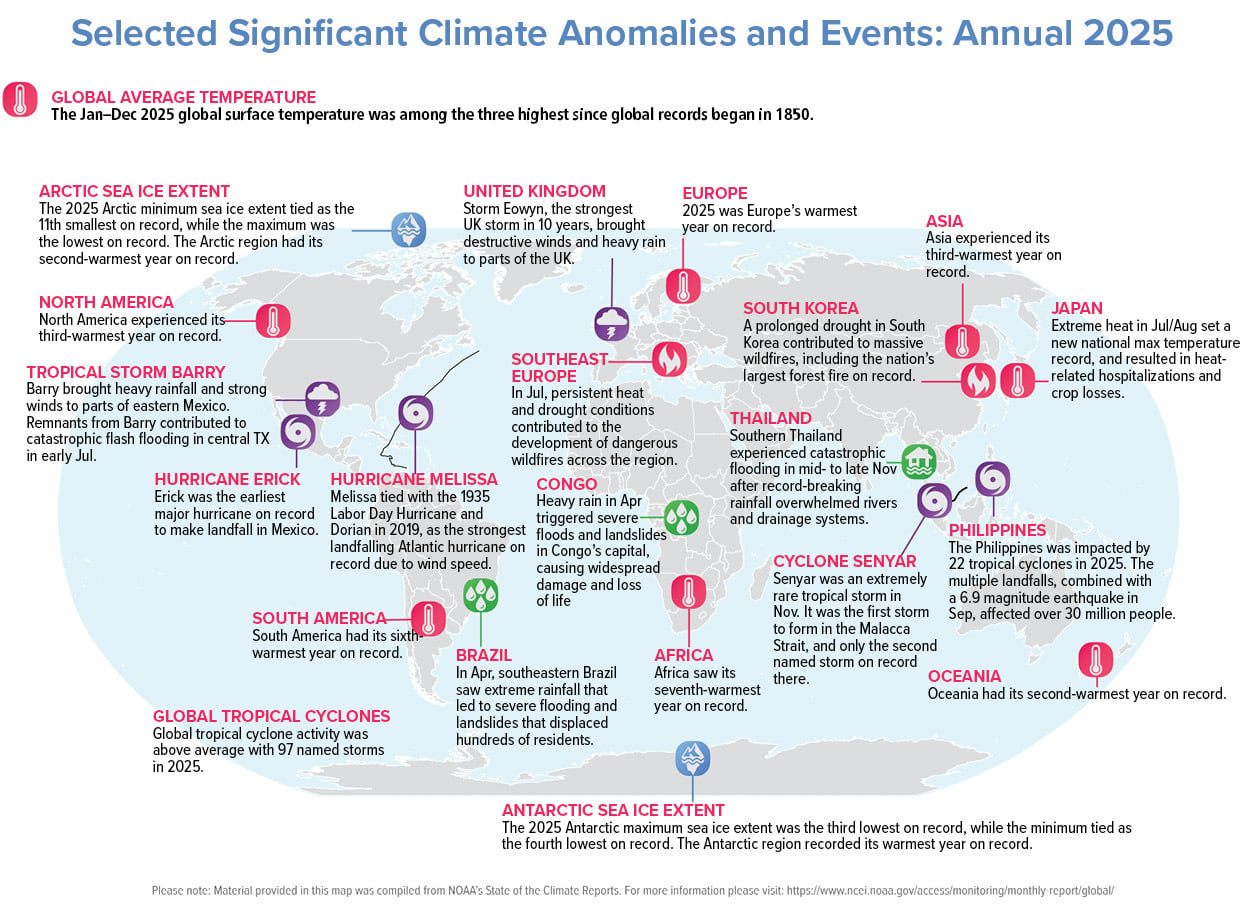
The global mean temperature across land and ocean was among the three highest years on record, with records dating back as far as the mid-1800s.
Near-neutral and La Niña-like conditions occurred in the eastern Pacific Ocean throughout the year, making 2025 the warmest year on record in which no El Niño conditions were present.
Europe reported its warmest year on record, and Russia, China, the Republic of Korea, and Argentina each reported their second warmest. All five major global temperature datasets used for analysis in the report agree that the last 11 years (2015–25) were the 11 warmest on record.
Lowest wildfire emissions since 2003
Global fire emissions in 2025 were the lowest in the Global Fire Assimilation System (GFAS) data record, which goes back to 2003. The emissions decreased by 26% from 2024. This reflects a longer-term decline in burning across many savanna and grassland regions, particularly in Africa and South America.
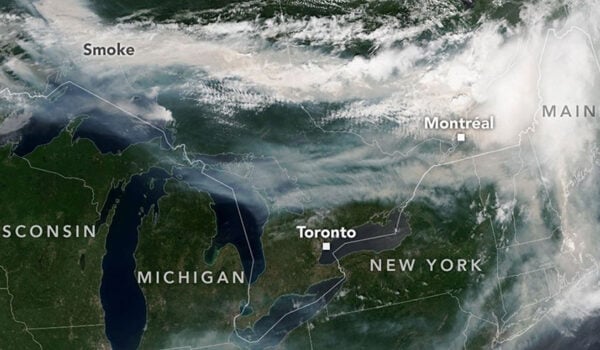
At the same time, fire activity is increasing in some forested regions, where climate change-induced severe droughts can make vegetation more flammable. Canada experienced a third consecutive year of extreme fires, with emissions second only to the record year of 2023.
Wildfire emissions within the EU reached a record high, driven largely by intense fires in Spain and Portugal in August. South America recorded its lowest fire emissions on record, around 65% below 2024 levels. Fire activity across Africa also fell to its lowest level since 2003, although the continent still accounted for about 40% of global fire emissions.
The contrasting trends show how changes in land use and climate are reshaping fire activity differently across the world.
“While global fire emissions reached a record low in 2025, we again saw extreme wildfires in several forested regions around the globe. This highlights the complex interactions of partly contrasting effects of land-use and land-cover change and a warming climate, and the need for continued monitoring,” says senior scientist and lead GFAS developer Johannes Kaiser from NILU.
Near-record warmth in the Arctic
The Arctic had its second-warmest year in the 126-year record.
Surface air temperatures in the Arctic are increasing at roughly three times the global average rate. Precipitation is also increasing across the region. In response to the precipitation and temperature increases, tundra plants have been increasing; 2025 marked the third highest value in the record with respect to greenness, a measure of the increase in plants and productivity.
In Arctic waters, maximum sea ice extent in 2025 was the lowest in the 47-year record, while minimum extent was the 11th lowest. The thickness of the sea ice, which is related to its age, has also been decreasing over time. Ice older than four years old is nearly absent, with only 95,000 square kilometers of older ice in September 2025 as compared to 1.5 million square kilometers in the 1980s.
Record warmth and low sea ice in Antarctica
Antarctica observed its warmest year since the start of the record in 1979. Surface melt on the continent was above average on most ice shelves, and melt on the Antarctic Peninsula approached record levels in early January.
Surrounding the continent, sea ice remained below average in 2025, following a nearly decade-long trend. Annual daily maxima and minima of sea ice extent were the third and fourth lowest on record, respectively.
Glaciers around the world continued to melt
Land-based glaciers continued to lose ice for the 38th consecutive year, losing the equivalent of more than 1 meter of water on average for the fourth straight year.
About 41% of the loss experienced by glaciers since 1976 has occurred in the last decade.
International effort
“The State of the Climate is a comprehensive, collaborative to assess annual metrics for the atmosphere, oceans, and cryosphere,” says AMS President Alan Sealls.
“It’s peer-reviewed data that paints a global picture of where we are, compared to benchmarks, and how fast things are changing. Consider it analogous to your annual health assessment from your physician. The State of the Climate connects to the health of all ecosystems. It presents critical measurements and trends which inform agencies, communities, businesses, and individuals for long-term planning.”