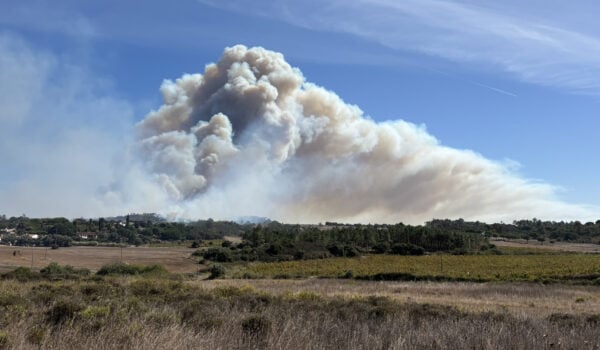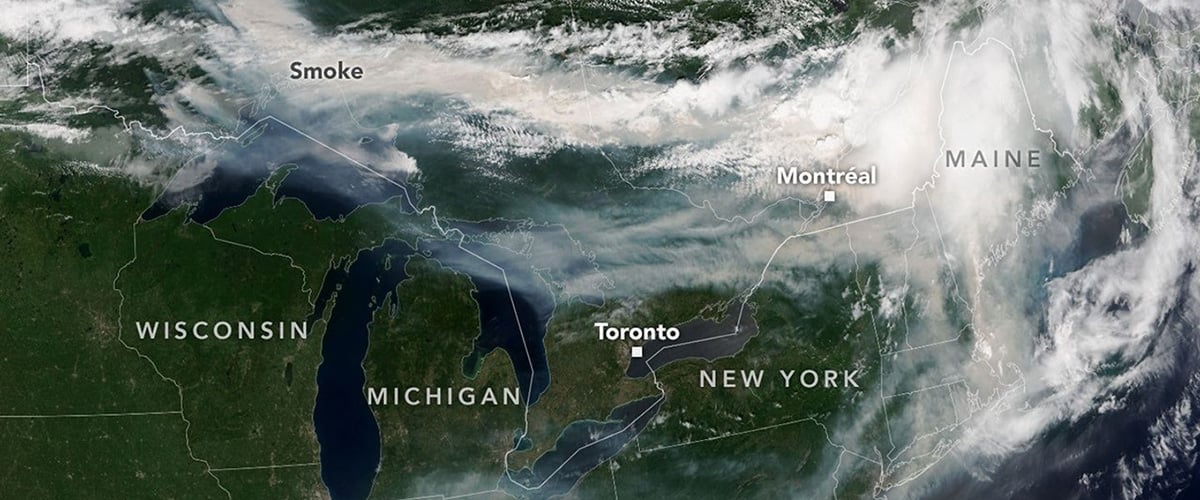
The 2026 Canadian wildfire season started a bit slower than in recent years, but in mid-July, the Canadian Interagency Forest Fire Centre (CIFFC) reports more than 850 wildfires raging across the country.
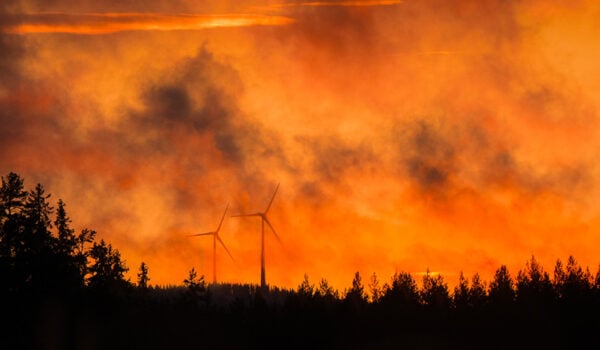
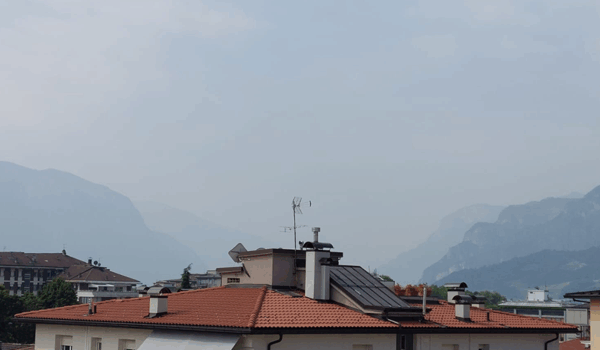
Right now, northern Ontario alone sees more than 100 active wildfires, which according to IQAir makes Toronto’s air quality among the worst in the world. Other large North American cities such as New York, Washington, DC and Detroit are also affected.
Models and laser beams monitor the smoke
Scientists from NILU are following the Canadian wildfires with interest – and with different technologies.
The simulation made with FLEXPART shows the transport of carbon monoxide (CO) emitted by the Canadian wildfires between July 10-July 20 2026. Credit: NILU
“We used the FLEXPART model to simulate the atmospheric transport of carbon monoxide (CO) and smoke particles emitted by the wildfires from Canada towards Europe, from 10-20 July. This was done as part of the NILU-lead EU project HealthRiskADAPT. We also picked up a signal caused by the smoke particles from the fires with instruments at the Birkenes observatory in the south of Norway”, says senior scientist Sabine Eckhardt.
For the modeling, she used fire emissions from the ECMWF Global Fire Assimilation System (GFAS) and meteorological input from the NOAA Global Forecast System (GFS).
Carbon monoxide and aerosols are both released by wildfire and can be transported through the atmosphere over long distances – also across continents, in this case from Canada to Norway.
Thus, senior scientist Kerstin Stebel was able to detect the smoke signal above the Birkenes observatory with an instrument called a ceilometer.
“Very simply put, a ceilometer can see particles in the air by sending up a laser beam and looking at the backscattered signal from the particles. On July 15th, the smoke layers were visible at around 2,5 km altitude,” she says.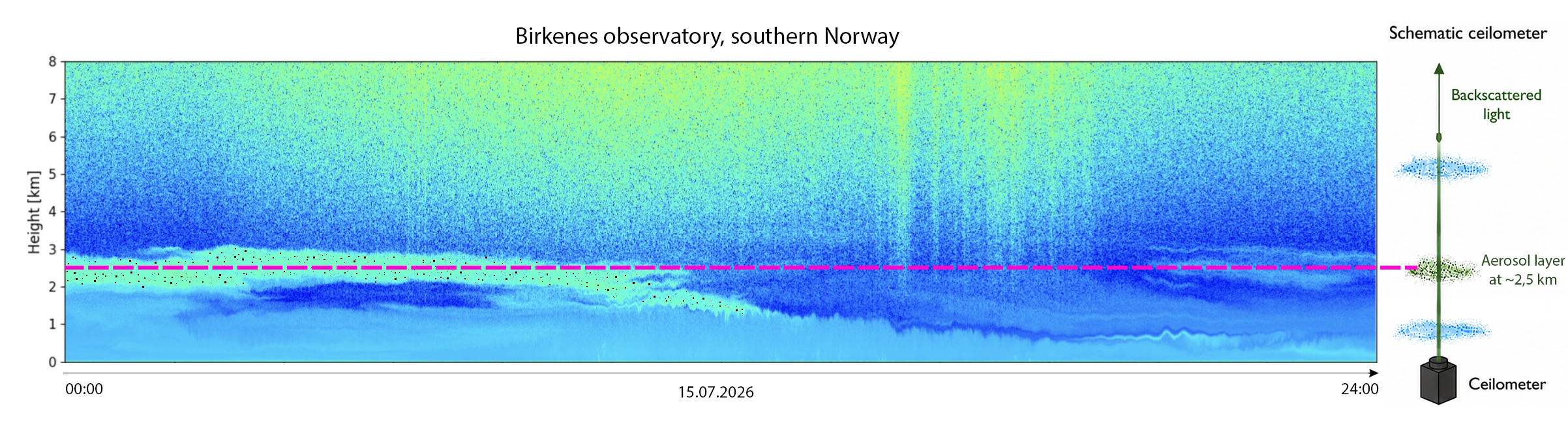
The ceilometer at the Birkenes observatory in southern Norway detected the smoke from Canada at around 2,5 km altitude on July 15th. Credit: NILU
2026 on 5th place so far
“So far in 2026, the Canadian wildfires have caused around 150 megatonnes (Mt) or 150 million tonnes of biomass – organic material such as vegetation measured after drying – to go up in smoke”, says senior scientist Johannes Kaiser.
In comparison, the catastrophic 2023 wildfires raging in Canada had burned around 500 Mt of biomass in mid-July, and close to 1000 Mt by the end of September.
“This year’s 150 Mt consumed is far from as extreme. Still, based on CAMS GFAS data, it is well above average. Out of the last 23 years, 2026 is for now the 5th highest in terms of amount of biomass burned up to mid-July,” explains Kaiser.
Great variation
“In 2023, the Northwest Territories contributed the most of all the Canadian territories, with 120 Mt biomass burned at the end of 2023. This year, it is yet again the biggest contributor when it comes to biomass consumed by wildfires,” says Kaiser.
Looking at Canadian wildfire data from the last 23 years, he sees a few differences between 2026 and the mean, territory- and province-wise:
So far this year, there are hardly any fires in British Columbia, and also below average in Saskatchewan. The wildfire activity is close to average in Quebec, and somewhat elevated in Manitoba. On the other hand, there have been more fires than any time on the earlier 23-year record in Ontario (11 Mt biomass burned); these are the fires responsible for poor air quality in Toronto.
The northern territory of Nunavut with its 0,3 Mt has negligible fire activity compared to the other territories. Still, the fact that it is already 1/3 higher than any previous year may well be linked to climate change in the Arctic.