
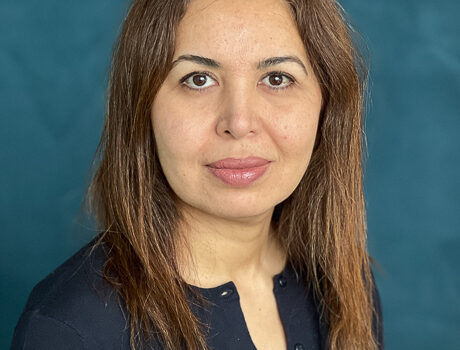


Nina Elisabeth Dahl
Nina Dahl is a laboratory coordinator and purchasing manager at the Department of Environmental Chemistry and Health Effects, at the Inorganic Section. She has worked at Nilu since 1991 in the same department.
Nina Dahl is responsible for:
- Registration of incoming samples.
- Purchasing and accounting.
- Completion of passive samplers.
- Safety delegate tasks.
Dahl has been involved in many of the tasks at Inorganic, and now works mostly administratively.
She finds motivation in the great collegial environment and her inspiring tasks.
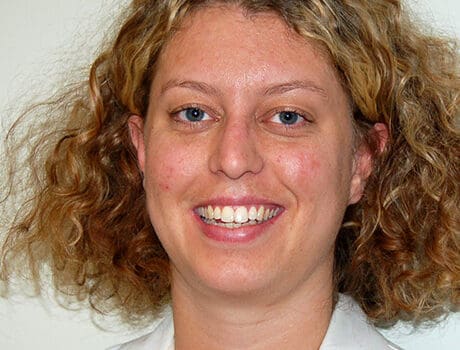


Erik Andresen
Erik Andresen is head of the section at NILU dealing with inorganic analyses. He is educated in chemical engineering at Sofienberg Technical College. Erik started in NILU's inorganic laboratory in 1989 as a chemical technician.
Erik has knowledge and experience with all the analysis methods. In 2007, he was hired as operations manager for his department. He was then employed as an engineer. The job involved customer contact, ordering analyses and reporting the analysis results to the customers.
Erik has been involved in starting up laboratories in five different countries. The job involves quality control of the analysis results before they are sent out to customers. Erik has a lot of experience in the following fields: analyses of cations and anions using ion chromatography, pH measurements in precipitation, analyses of precipitation dust, gravimetrically determination of PM2.5 and PM10 on filters, as well as determination of NO2, SO2 and NH3 using passive samplers.

Karl Espen Yttri
Dr. Karl Espen Yttri is a senior scientist at NILU with a Ph.D. in aerosol science. He has extensive expertise in atmospheric aerosols and their chemical composition across diverse environments, ranging from urban areas to the pristine Arctic and Antarctic.
His primary focus is on carbonaceous aerosols, using both on-line and off-line methodologies for the source apportionment of anthropogenic and natural aerosol sources. This includes developing analytical methods for carbonaceous aerosol, including source-specific organic tracers.
As a member of the Chemical Coordinating Centre of the European Monitoring and Evaluation Programme (EMEP) at NILU, he contributes to research on the long-range atmospheric transport of aerosol particles.

Torleif Weydahl
Torleif Weydahl is a senior scientist in the Department of Urban Environment and Industry and has worked at NILU since 2017. He holds a degree in mechanical engineering specializing in energy and process technology and has a doctorate from the University of Trondheim (NTNU) in modeling of turbulent mixing and reactions.
At NILU, Torleif primarily works on air quality (AQ) assessments related to requirements within Norwegian regulation and in emission permits for Norwegian municipalities and industrial companies. He conducts emission and dispersion calculations for several source sectors, including analyses and the preparation of reports and documentation. He has developed AQ assessment and action plans for several Norwegian municipalities and has led the development of NERVE, an emission model for road traffic.
Torleif contributes to the European Environment Agency's (EEA) topic centers, focusing on reporting emissions from the industrial sector in EU and EEA member countries. He is also an experienced project manager.
Before starting at NILU, Torleif gained experience in carbon capture and storage research from SINTEF in Trondheim and in consultancy related to fire and safety at Lloyd's Register.

Sam-Erik Walker
Sam-Erik Walker holds an M.Sc. in Statistics and a B.Sc. in Computer Science from the University of Oslo.
He has over 30 years of experience developing and applying air pollution dispersion models for cities and urban areas and analysing air quality data using various numerical and statistical tools and methods. These include deterministic and probabilistic methods for model evaluation and validation, data assimilation, ensemble modelling, and data fusion to combine air quality observations with model results. He is one of the principal authors of several of the present models at NILU, including the urban air pollution dispersion model EPISODE.
He is also the leading developer behind the AirGAM trend and prediction model at NILU. This model enables the estimation of meteorology-adjusted long-term trends of air pollutants such as NO2, O3, PM, and VOCs at air quality stations in Norway and Europe. It has been used to quantify the effects of lockdowns during the recent COVID-19 pandemic and for estimating long-term trends for all EEA stations in Europe.
Recently, he developed the AirRisk model, a risk assessment model to quantify the risk or probability of exceeding limit values of NO2 and PM in connection with recent assessment studies in various Norwegian cities and urban areas, including Lørenskog, Drammen, and Oslo.
He actively disseminates scientific knowledge by writing reports and papers and regularly participates in scientific conferences. His primary motivation for working at NILU is to contribute to a cleaner world.

Dam Thanh Vo
Dam Thanh Vo has worked as a scientist at NILU since 2007. He is focusing on Emission Inventory on regional and local scale; Spatial Data Analysis using ArcGIS Desktop, ArcGIS Pro, ModelBuilder; Visualization of air quality dispersion modelling results – ESRI WebAppBuilder.
He has a Master in Environmental Geology and Geosciences from the University of Oslo, Norway, and is educated as an Geology and Environmental Engineer at the University of Technology, Ho Chi Minh City, Vietnam.
Before 2007, Dam Thanh Vo held a position as Head of EQMA Division, Environmental Quality Monitoring and Assessment Division, Ho Chi Minh City Environmental Protection Agency (HEPA), the division manages the whole environmental quality monitoring system of Ho Chi Minh City include instrument maintenance and data management.


Kjetil Tørseth
Kjetil Tørseth received his Dr Scient degree at NTNU-Trondheim, and has worked at NILU since 1992.Since 1999 he has served as department head/research director.
His expertize includes measurements and data management and assessment of precipitation chemistry, reactive gases, aerosols and climate forcers, and their associated effects on ecosystems, health and climate.
He is engaged in a wide range of programs addressing assessments of air pollution on regional and global scales, including EMEP (head the EMEP Chemical Coordinating Centre), WMO Global Atmosphere Watch (GAW Country contact of Norway, member to the Scientific Advisory Group on Reactive Gases, responsible for the two GAW World Data Centers on Aerosols (GAW-WDCA) and Reactive Gases (GAW-WDCRG). He is also engaged in several research infrastructure activities like ICOS, ACTRIS and SIOS. He has a broad experience from many international research and capacity building projects.

Rona Louise Thompson
Dr. Rona Thompson is a senior scientist at NILU, Kjeller, since 2011.
Dr. Thompson has a PhD in atmospheric chemistry from Victoria University of Wellington, New Zealand. Since completing her PhD, Thompson has been a post-doc at the Max Planck Institute for Biogeochemistry in Jena, Germany, and at the Laboratory for Climate and Environmental Sciences in Saclay, France.
Dr Thompson’s main research interests are in understanding the sources and sinks of atmospheric pollutants, including greenhouse gases, and the processes driving these. For this, she employs atmospheric transport models and statistical methods.
Dr Thompson has a long experience working with, and developing, numerical models for atmospheric research. She is also the developer of the atmospheric inversion framework, FLEXINVERT.
Dr Thompson is actively involved in Norwegian and European research projects and is currently the coordinator of the Horizon Europe project, EYE-CLIMA. She is also the co-leader of the Global Carbon Project N2O Budget activity.


Philipp Schneider
Dr. (Mr.) Philipp Schneider is a senior research scientist at NILU.
He received his PhD in 2008 from the University of California-Santa Barbara focusing on satellite remote sensing and spatial data analysis. Subsequently he held a position as postdoctoral research scientist at NASA’s Jet Propulsion Laboratory and the California Institute of Technology.
Philipp has extensive experience in the application of satellite remote sensing techniques for mapping and monitoring the environment. His current research focuses primarily on the use of satellite remote sensing data for applications in atmospheric composition and air quality.
Previously he has worked on multiple projects related to exploitation and validation of satellite-based land and lake surface temperature. In addition, he works on developing methods and tools to carry out geostatistical data fusion and data assimilation for combining air quality observations with model data to improve urban- and regional-scale mapping of air quality.
He acts as a reviewer for multiple scientific publications related to satellite remote sensing, air quality, and the environment. He has given over 200 presentations at international scientific conferences and workshops and has authored dozens of technical reports.
Philipp has been appointed a member of the Research Council of Norway National Reference Group for Horizon Europe Cluster 4 on Digital, industry and space. He is author of more than 50 peer-reviewed journal articles, with over 6000 citations and an h-index of 30.

Gabriela Sousa Santos
Dr. Gabriela Sousa Santos did her graduate studies in Environmental Engineering in the University of Aveiro, Portugal. While studying the ways pollution is transported and transformed in the environment, she got curious on how these pollutants affect human health. Thus, she continued studying Toxicology in her post-graduation while working in Environmental Impact Assessment Studies.
She did her PhD in atmospheric chemistry at Max-Planck Institute for Meteorology, Hamburg. It was here that she started using numerical modelling in global scales to analyze the role of naturally emitted halogen compounds on the oxidative capacity of the atmosphere. She then started also simulating salt particles and continued into secondary organic aerosols and their impact on the global radiation budget, work she continued in ETH, Zurich.
At NILU, she has moved into modelling at the local scale, which leads her to investigate the specificities and challenges in creating simulations at this scale of the transport of pollution.
Her current interests are in investigating which policy options will lead to healthier, more comfortable cities for higher quality of life and more sustainability globally. Cities have the characteristic of high population concentration which creates higher exposition to pollution and enhanced risk to climate change, however it also creates opportunities for higher efficiency systems in the use of resources.