Scientists have gained a clearer picture of why methane has been increasing in the atmosphere. A new study shows that adding one extra type of measurement can help reveal whether the gas comes from microbes found in wetlands, from fossil fuel or other sources.
Methane is one of the most important greenhouse gases in Earth’s atmosphere. Methane levels have been rising again since 2006 after a stable period, but finding out exactly where that extra methane comes from has proven difficult.
Wetland emissions increase the most
One of the main findings in the new study by scientists at Institute for Marine and Atmospheric research Utrecht (IMAU), California Institute of Technology, NILU and others, concerns the increase in atmospheric methane since 2006. The results indicate that this rise is mainly explained by growing methane emissions from wetlands.
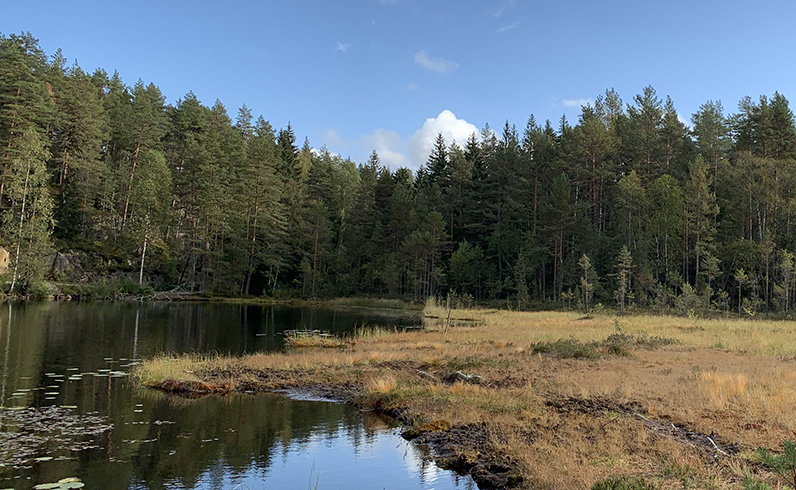
Fossil fuel emissions also increased, but by a smaller amount. At the same time, methane emissions from biomass burning declined, while changes from agriculture and waste were smaller and more variable.
“Our results suggest that methane from microbes, such as bacteria found in wetland soils, cow stomachs, and agricultural and municipal waste, have played the largest role in the renewed growth of atmospheric methane since 2006. We also see that climate change has led to changes in wetlands at both low and high latitudes,” says Head of NILU’s Centre for Atmospheric Data, senior scientist Cathrine Lund Myhre.
35 years of measurements + a computer model
According to the study, one extra type of measurement used together with existing methods, can provide a much clearer picture. By adding information from hydrogen isotopes in methane, the scientists were able to better separate methane released from microbes and from fossil fuels.
To investigate the problem, the scientific team behind the study combined 35 years of atmospheric measurements with a computer model that estimates how much methane is emitted by different sources around the world. The model included microbial methane from wetlands, agriculture, and waste, as well as methane from fossil fuels and biomass burning. In addition, it included the sunlight-driven chemical processes that remove methane from the atmosphere.
Two different “fingerprints”
Senior scientist Stephen Platt from NILU explains that the key advance in the study was using two different isotopic “fingerprints” of methane.
“Scientists have long used the carbon isotope composition of methane (δ¹³C-CH₄) to characterize the methane source,” he says. “This study shows that adding measurements of the hydrogen isotope composition (δ2H-CH4) provides important complementary information, allowing the model to distinguish more reliably between different methane sources.”
The additional hydrogen isotope data especially improved the model’s ability to estimate methane emissions and separate natural and human sources, specifically the emissions from wetlands from emissions linked to fossil fuels.
A new tool for identifying methane sources
The study also improved estimates of how methane is removed from the atmosphere. Including the hydrogen isotope measurements gave the scientists a better picture of these removal processes and led to a slightly shorter estimated methane lifetime in the Northern Hemisphere.
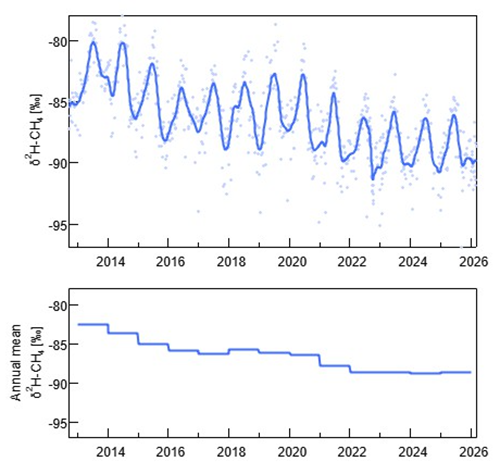
To be clear: the new measurements do not replace existing methods. Instead, they complement and strengthen them. By combining carbon and hydrogen isotope measurements, scientists can better test different explanations for changes in atmospheric methane and reduce uncertainty in their estimates.
“The hydrogen isotope measurements add valuable new information that help us separate different methane sources. We will from now on also report hydrogen isotopes in methane in the Norwegian monitoring programme for greenhouse gases,” says Platt.
The authors conclude that long-term measurements of hydrogen isotopes in methane are an important tool to study the global methane cycle. Together with existing observations, they can help scientists better understand where methane comes from, how emissions change over time, and how methane is processed in the atmosphere.
As methane continues to play a major role in climate change, having more accurate ways to identify its sources will help improve our understanding of both the Earth’s changing atmosphere, and its response to climate change.