MOCA – against climate warming
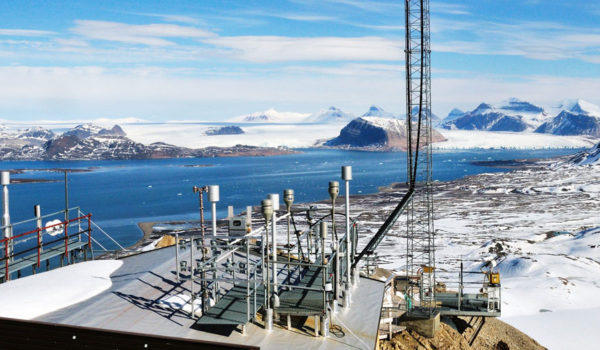
”MOCA- Methane Emissions from the Arctic OCean to the Atmosphere: Present and Future Climate Effects” is a new project at NILU.
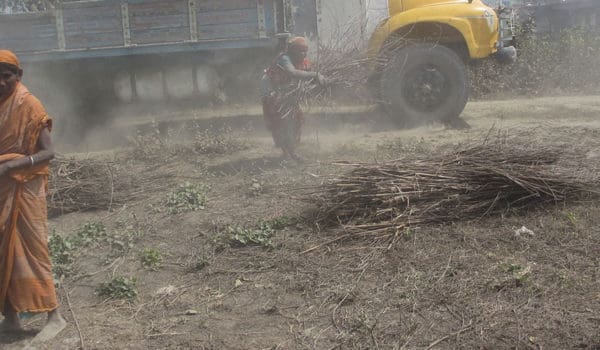
NILU cooperates with Fredskorpset (FK) to strengthen air quality management in Bangladesh through exchange of young professionals.
According to recent media reports (example) Norway is a major source of pollution within the Murmansk county in N-W Russia. It is claimed that 45% of the total pollution in the area is originating from abroad, with Norway as an important contributor. NILU – Norwegian Institute for Air Research has worked extensively in this area, and has critical scientific objections to this assertion. NILU’s work shows that it is actually sulfur dioxide (SO2) and heavy metals that are causing pollution in the border area, not nitrogen dioxide (NOX).
GLP is a quality system to ensure the uniformity, consistency, reliability, reproducibility, quality, and integrity of experimental studies. NILU’s Health Effects Group has implemented GLP as standard quality system to perform, develop and validate methods for in vitro toxicity testing of compounds such as chemicals, aerosols and nanomaterials.
NILU has started two projects in cooperation with the Polish Chief Inspectorate of Environmental Protection. The projects give NILU the opportunity to disseminate experiences on air quality measurement and assessment to Poland to contribute to the improvement of air quality in Europe.
In the last 20 years, NILU has been actively involved in research and cooperation projects in China. Current activities include the coordination of two projects to support SO2 emission trading in the Shanxi province and to establish an up-to-date air quality (AQ) information system for the Hubei province. Both initiatives are funded by EuropeAid, EU – China Environmental Governance Programme (EGP).
Euronews, a European, multilingual news television channel, have made a TV presentation about the MEMORI project which is coordinated by NILU.
Dr. Elisabeth Pacyna, Prof. Jozef Pacyna and dr. Kyrre Sundseth receive award for having an article among the “Top-50 most cited articles” published in Atmospheric Environment (2010-2011).
Two new projects were accepted in 2012 by the Research Council of Norway under a collaboration program with India on climate research.
Successful interaction between science and policy making.
European air quality and health professionals cooperate with authorities and users for better air quality in Europe.
CITI-SENSE is a new EU project under the lead of NILU, with the aim to empower citizens to contribute and participate in environmental governance. The project is also new in the combination of scientific methods, technology development and active empowerment of citizens.
Kyrre Sundseth from NILU defended his Ph.D. dissertation publically at the Chemistry Department of the Gdansk University of Technology on Friday, 5 October. He presented his thesis on “A novel combination of methods developed for decision support on abatement of mercury in Europe”. Jozef Pacyna at NILU har been his supervisor.
Results from more than 30 cultural heritage projects were presented at the 2nd European Workshop on cultural Heritage Preservation (EWCHP) which took place at Kjeller last week. A study from England showed that a rise in the temperature due to climate change may contribute to the release of organic acids in the museums in a more serious amount than today.
Prof Jozef Pacyna from NILU has been awarded with the Lifetime Achievement Award (LAA) of ICHMET – the International Conference on Heavy Metals in the Environment. It is the first time this award is given, and both Prof Jozef Pacyna and Prof Jerome Nriagu from the University of Michigan have been selected to receive the prize.
The infrared system that detects and informs about volcanic ash in the atmosphere has been tested on Airbus in Toulouse, France. – We are happy to confirm that the system also works in high altitudes where the big commercial aircrafts fly, says Dr. Fred Prata from NILU, inventor of the system.
From NILU’s Annual magazine: Senior scientist Armin Wisthaler and NILU’s new mass spectrometer can detect volatile contaminants at unprecedented speed including species that have never been detected before. It is now also possible to analyse for example organic pollutants in the atmosphere from an airplane at full speed, to study unknown chemical reactions in indoor air and to investigate a series of other dependencies of importance for environment and human health.
Article from NILU’s Annual Magazine: Air quality in several major Norwegian cities is now so bad that it causes significant health problems, and if worst comes to worst, air quality may even be poorer in the coming years. “The good news is that there are measures that can improve air quality,” says NILU’s Leonor Tarrasón.
From NILU’s Annual magazine 2011: NILU’s Fred Prata has developed an “ash camera” that alerts airplane pilots to the presence of ash clouds, allowing the aircraft to avoid having to be grounded by volcanic eruptions. The camera is now being tested on EasyJet’s aircraft.
Article from NILU’s Annual magazine 2011: Three days after a volcanic eruption in Iceland in May 2011, the Met Office in London warned that volcanic ash in the skies over large parts of southern Norway could represent a danger to air traffic. But Norwegian experts had their own models and good satellite data and concluded that air traffic could resume as normal.
The Norwegian Government’s 2012 white paper on climate change states that research on the effects of global warming and measures to address the problem will continue to be a high priority, along with research on the climate system itself. Research is also an important priority in the Government’s High North strategy. But is the same effort being made in environmental monitoring, the cornerstone of climate research?
Knut Breivik and co-authors won the award as 1st Runner-Up Best Policy Analysis paper for 2011, published in the scientific journal Environmental Science & Technology. The title of the paper is “Are reductions in industrial organic contaminants emissions in rich countries achieved partly by export of toxic wastes?”.
The recent kick-off of the second major project in Bangladesh demonstrates NILUs cooperative efforts in assessing and managing the air quality problems in the country.
– The COMETproject will explore how we can work together to “act local but think global”, says Alice Newton, a global change researcher from Norway.